Money & Investing
How to Budget: Build a Budget That Actually Works
How to budget step by step: track what you spend, pick a method that fits, plan for irregular bills and review monthly. Works on tight or uneven incomes.
· 7 min read
Saving money for beginners
Learn a simple monthly routine for saving money: map where your money actually goes, move savings aside the day you get paid, plan for the irregular bills that wreck most budgets, and protect what you save. It suits people on any income who are tired of running out before payday; most people need two or three monthly cycles before the routine feels natural, and the amount you can save depends on your income and costs.
Secure checkout by Hotmart · 7-day money-back guarantee
To save money, decide on a savings amount before you spend, move it to a separate account automatically on payday, and cut or plan the costs that keep surprising you. A simple budget shows where the money goes, a small emergency fund stops surprises from turning into debt, and regular reviews keep the habit going. Even small, steady amounts matter: in the Federal Reserve's survey of 2025, 63% of US adults said they would cover a $400 emergency with cash or its equivalent, which means many others would need to borrow or couldn't pay at all.
Part of our honest guide to making money online.
Sound familiar?
The month ends before the money does
You don't feel like you spend on anything special, yet there's nothing left by the last week. Usually the problem is not one big purchase but a dozen small, invisible ones plus bills you forgot were coming.
You save for a few weeks, then something breaks
The car, the phone, a school trip. Without a buffer, every surprise drains your savings or lands on a credit card, and it starts to feel like saving is pointless.
Budgets feel like punishment
You've tried tracking every cent in a spreadsheet and gave up after two weeks. Strict plans that leave no room for normal life rarely last.
Debt eats the money you meant to save
Interest and minimum payments take a bigger bite each month, and you're not sure whether to pay debt down or build savings first.
The turning point
Saving is less about willpower and more about order and visibility. The method changes when and how money moves, so saving happens before spending instead of from whatever is left over.
Savings come first, automatically
An automatic transfer on payday, even a small one, turns saving from a decision you make 30 times a month into one you make once. The CFPB describes automatic transfers as one of the easiest ways to save.
Irregular bills get their own plan
Car repairs, annual subscriptions, gifts and school costs are predictable in total even if not in timing. Setting aside a little for each one stops them from breaking the month.
A short monthly review keeps it alive
A 20-minute check each month to compare plan and reality, adjust categories and celebrate progress is what turns a one-off effort into a habit.
How this is different: Most advice is either a list of tiny cuts (skip the coffee) or a rigid budget that collapses in the first bad week. This approach focuses on the structure around your money, so it works on a tight income and keeps working when life gets messy.
How it works
See where your money goes
Look back over one to three months of bank and card statements and group spending into needs, wants and irregular costs. Our guide on how to build a budget that works walks through it.
Pick a savings amount you can keep
Start with an amount small enough that you won't pull it back, and set an automatic transfer for payday.
Build a starter emergency fund
Aim first for a small cushion, then grow toward one to three months of essential costs. See how to build an emergency fund.
Deal with high-interest debt
Choose a payoff order and stop new high-cost borrowing, using the steps in how to get out of debt and start saving.
Review monthly and raise the amount
Each month, compare what you planned with what happened, fix one leak and, when income rises, raise your savings transfer first.
Secure checkout by Hotmart · 7-day money-back guarantee
The skills involved
Know exactly where your money goes
Track spending without obsessing over every cent, and sort it into categories that show you where real savings are possible.
Choose a budgeting method that fits your life
Compare zero-based, percentage-based and envelope-style budgets, and pick one you can keep with a steady or irregular income.
Make saving automatic
Set up payday transfers, split deposits and separate accounts so saving happens before you have the chance to spend.
Stop irregular bills from wrecking your month
Plan for annual, seasonal and surprise costs with small monthly set-asides, so they stop showing up as emergencies.
Cut the big costs, not just the small ones
Work through housing, transport, food, phone, insurance and subscriptions, where one decision can matter more than dozens of small sacrifices.
Build and protect an emergency fund
Decide how much you need, where to keep it so it's safe and easy to reach, and when it's right to use it.
Handle debt without falling for traps
Compare payoff strategies, understand what free nonprofit counseling offers, and recognize the warning signs of debt relief scams.
Keep the habit going for the long run
Use a simple monthly review and realistic goals so saving becomes routine, and know when you're ready to start investing.
Secure checkout by Hotmart · 7-day money-back guarantee
Realistic expectations
| Stage | Typical time | What you do | What happens |
|---|---|---|---|
| Getting clear | The first 1 to 2 weeks | Review statements, list bills and debts, sort spending into needs, wants and irregular costs | You see where money leaks; this is often uncomfortable but useful |
| First plan | Month 1 | Set a small automatic transfer, create a simple budget, cancel what you don't use | Some categories go over; the plan needs adjusting, which is normal |
| Building the buffer | Months 2 to 6 | Grow a starter emergency fund, set aside money for irregular bills | Surprises start coming out of savings instead of a credit card |
| Habit | 6 months and beyond | Monthly reviews, raise the savings amount when income rises, tackle debt | Saving feels routine; how much you save depends on your income, costs and circumstances |
Illustrative ranges based on how budgeting and saving routines usually develop, not measured results. Amounts saved vary widely with income, household size and cost of living.
Is it right for you?
This is for you if…
This is NOT for you if…
Who's behind this
Getback publishes free, practical guides on making money online and managing it well. We show real costs, realistic timelines and the trade-offs most “gurus” skip — and we never promise income. Read how we research and update every guide in our editorial policy.
Go deeper
The ebook
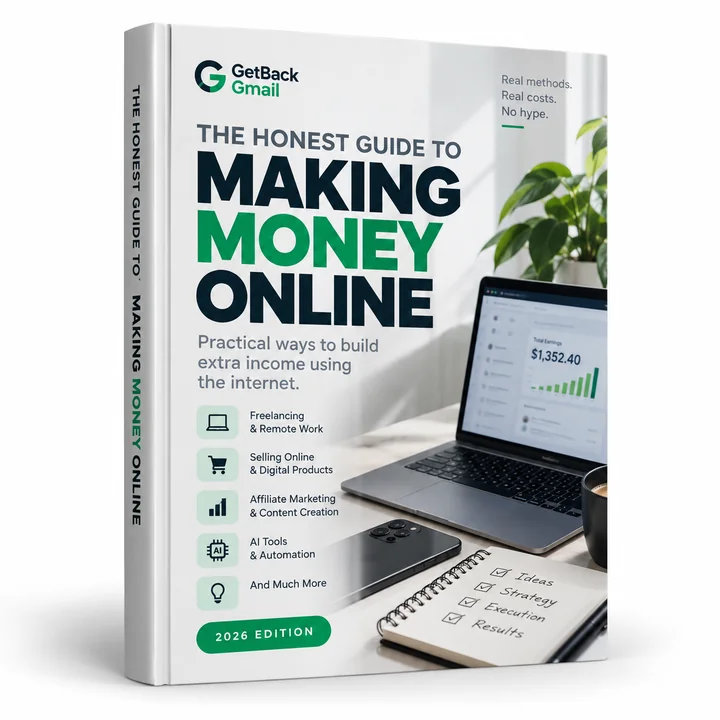
A practical, beginner-friendly ebook about realistic ways to earn money online. Instead of promising quick or guaranteed income, it explains how each method works, what it may cost to start, the skills involved, common mistakes to avoid and practical first steps.
How it relates to how to save money: It doesn't teach saving or investing. It covers realistic ways to earn extra income online, which is the money you'd save or invest.
Secure checkout by Hotmart · 7-day money-back guarantee
One-time payment · instant digital access
The Honest Guide to Making Money Online
Today's price is shown at checkout in your local currency. Payment and delivery by Hotmart.
Secure checkout by Hotmart · 7-day money-back guarantee
Go through the lessons. If you decide it isn't for you, request a refund within 7 days through Hotmart and you get your money back, no questions asked.
Questions
A common rule of thumb is around 20% of take-home pay, but on a tight income any consistent amount is a good start. Begin with what you can keep up, even a few dollars a week, and raise it when your income grows or a debt is paid off.
Many consumer educators suggest a small starter emergency fund first, so a surprise doesn't push you back into debt, and then extra payments on high-interest debt. Our guide to getting out of debt and starting to save explains both payoff methods.
Most people keep short-term savings in a separate, insured savings account that pays a competitive rate and is easy to reach but not linked to their debit card. See where to keep your savings for what to look for.
Often yes, though the amounts may be small and some months you may save nothing. Checking for benefits and credits you qualify for, avoiding high-cost borrowing and saving in small automatic amounts usually matter most. See how to save money on a low income.
No. This is general education about budgeting and saving, not personalized financial, tax or legal advice. For decisions about your own situation, talk to a qualified professional or a nonprofit credit counselor.
It's a beginner-friendly ebook that compares realistic ways to earn money online — freelancing, remote work, side hustles, affiliate marketing, digital products, AI tools, selling online and other legitimate paths. For each one it explains how it works, what it may cost to start, the skills involved, common mistakes and practical first steps. It's an overview to help you choose, not a specialist manual on a single method.
Beginners who want an honest map before they spend time or money — people with a job, students, parents at home — and who are willing to put in consistent effort. It is not for anyone looking for a shortcut.
It varies a lot and depends on your skills, effort, market and execution. Many beginners need weeks to months of consistent work before earning anything meaningful, and some never do. Anyone promising fixed results or timelines is not being honest with you.
The price is shown at checkout in your own currency, as a one-time payment. Several of the methods in the ebook can be started with little or no money beyond a phone or computer; paid tools are explained with their real costs before you decide.
Payment and delivery are handled by Hotmart. After checkout you receive an email with access to the ebook, available right away.
Yes. You have a 7-day money-back guarantee under Hotmart's refund policy. If it isn't for you, request a refund within 7 days of purchase and you get your money back.
Yes. It's a digital ebook you can read on a phone, tablet or computer.
The ebook is sold through Hotmart, a large digital-products platform, and comes with a money-back guarantee. It doesn't promise income — it explains methods, costs and risks so you can decide for yourself.
Learn a simple monthly routine for saving money: map where your money actually goes, move savings aside the day you get paid, plan for the irregular bills that wreck most budgets, and protect what you save. It suits people on any income who are tired of running out before payday; most people need two or three monthly cycles before the routine feels natural, and the amount you can save depends on your income and costs.
Secure checkout by Hotmart · 7-day money-back guarantee
How to budget step by step: track what you spend, pick a method that fits, plan for irregular bills and review monthly. Works on tight or uneven incomes.
· 7 min read
How to build an emergency fund from zero: how much you need, a starter goal, where to keep it, how to fund it on a tight budget and when to use it.
· 7 min read
Practical money saving tips for housing, food, transport, bills, banking and shopping, ranked by impact, so you focus on the changes that actually add up.
· 7 min read
Also consider: Investing for Beginners · Side Hustles · or browse every way to make money online.
Earnings disclaimer: Results vary from person to person and depend on effort, market and execution. This is educational material and does not guarantee earnings. See our full earnings disclaimer. Educational content only — not financial advice.